
How to Find the Right Used Car Parts for Your Vehicle?
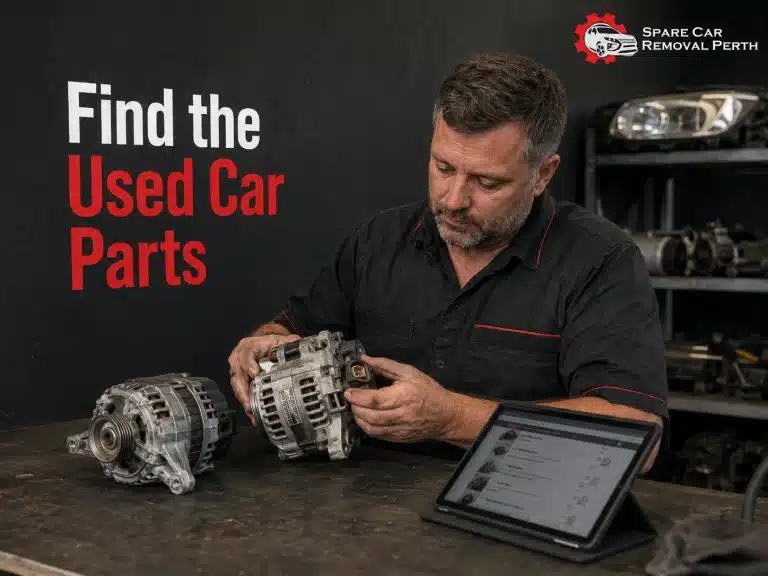
Buying a second-hand car part can be a good way to keep repair costs down. The tricky part is making sure you are buying the right one. A part may look identical to yours and still have a different connector, mounting point or specification. Your VIN, build date, engine details and the number on the old part can all help narrow down the search.
It also pays to ask about the part’s condition and what happens if it turns out to be the wrong match. Getting these details sorted before you buy is far easier than dealing with an unsuitable part later.
Why the Same Make and Model Can Still Take Different Parts
The make and model of a car only tells you so much.
Manufacturers can release the same model with different engines, transmissions, body styles and trim levels. Changes can also be made during a production run. A component fitted to a vehicle built early in the run may not be the same as one fitted a few months later.
That is why the registration year alone can sometimes lead you in the wrong direction. Two cars may both be registered as the same year even though their build dates are different.
Engine specifications matter too. An alternator, starter motor, radiator or other mechanical component may differ between engine options.
The same applies to body parts. A door, mirror or light can vary between body styles or different versions of the same model.
So when you are working out how to find used car parts, start with the exact vehicle rather than searching by model name alone.
What Details Do You Need to Confirm Used Car Parts Compatibility?
Have your vehicle details in front of you before calling a wrecker. It saves a fair bit of back and forth.
|
What to find |
Where to find it |
Why it matters |
|
VIN |
Windscreen, driver’s door area or vehicle documents |
Identifies the vehicle |
|
Build date |
Compliance or identification plate |
Helps separate different production versions |
|
Engine details |
Vehicle documents or engine information |
Useful when matching engine-related parts |
|
Transmission |
Vehicle information or records |
Important for transmission-related components |
|
Body style |
Vehicle details |
Helps with body parts |
|
Variant |
Vehicle documents or identification labels |
Some versions use different components |
|
Part number |
Label, stamping or moulding on the old part |
Useful for matching the replacement |
|
Photos |
Take them before removing the part |
Shows shape, plugs and mounting points |
If the old component is still on the car, take some photos before removing it. Get a close shot of any label or number, then take another of the connectors and mounting points.
Don’t worry about getting professional-looking photos. Clear pictures taken in good light are enough to give a parts supplier something useful to compare.
If the car has been modified, mention that as well. A replacement part that suits a factory-standard vehicle may not necessarily suit a car that has been changed.
How Do You Find the Part Number on Your Old Component?
The part number is often one of the quickest ways to narrow down a replacement.
Look for a label, stamped number, or moulded marking on the component. Electrical parts commonly have an identification label, while some mechanical parts have numbers cast or stamped into their housing.
Write down the whole number. Don’t leave off the letters at the end because they may identify a different version.
If the number is dirty, faded, or partly hidden, take a photo rather than guessing. A supplier can look at the marking alongside the vehicle details.
Do Not Confuse a Casting Number With a Part Number
You may come across several numbers on a used mechanical component. They don’t necessarily all identify the part you need.
A casting number can relate to the basic housing rather than the complete replacement component. A serial number may identify that particular item rather than the part type.
If you’re unsure, send through a photo of the numbers and the part itself. That gives the supplier more to work with than a number copied down without any context.
How Do You Check if a Car Part Will Fit Another Model?
This is where things can get a little confusing.
Some manufacturers use the same component across different models. You may therefore come across a used part listed for another vehicle that is actually suitable for yours.
But don’t take the listing alone as proof.
The two vehicles may have different engines, transmissions, body configurations or production dates. Electrical parts can also have different plugs or specifications despite looking much the same.
If you come across a part from another model, give the supplier your vehicle details and ask them to check it. If you have the number from your old component, provide that as well.
A photo can help with the comparison, but the fact that two parts look alike doesn’t settle the question of whether they are interchangeable.
What Can the Donor Vehicle Tell You?
The vehicle that a used part came from can tell you a little about its history.
Say you are buying a body component from a vehicle that was involved in a crash. You would want to know whether that part was anywhere near the damaged area. A panel may look fine from the outside while having damage around a mounting point.
The same thought applies to other components. Knowing why a vehicle was taken off the road gives you some useful background.
A car with a failed engine, for instance, may still have other usable components. A vehicle involved in a collision needs a closer look at parts around the impact area.
Spare Car Removal dismantles vehicles and salvages usable components for resale. Its website states that used parts are cleaned and tested before being supplied to customers.
When buying a used part, ask about the donor vehicle where that information is available. Keep the invoice and any information supplied with the part as well.
What to Check Before Buying Used Car Parts
Once you have worked out that a part should fit, have a proper look at its condition.
Look for Damage
Start with the obvious things. Cracks, broken mounting points, bent brackets and damaged connectors can cause trouble after installation.
For mechanical components, look for signs of leakage, corrosion or excessive wear where the part can be inspected. If it has moving sections, ask whether it has been checked before resale.
Check the Connectors and Mounting Points
Electrical connectors deserve a close look. Corrosion or damaged pins can affect how a component works once it is fitted.
Mounting points matter too. A small crack or bend can stop a component from sitting correctly, even when the main body of the part looks fine.
Check What Comes With the Part
This is easy to overlook when buying online or over the phone.
A photograph may show a complete assembly, while the part being sold may include only one section. If you need a bracket, attached fitting or another part of the assembly, ask whether it is included.
How to Choose Used Car Parts That Are Worth the Money
Price matters, but it should not be the only thing you compare.
A used part that costs less than a new replacement may make sense, particularly when the new component is expensive or hard to source. Its condition and expected remaining service life still need to be considered.
Spare Car Removal’s website lists used car parts recovered through its vehicle wrecking operation. The business says the parts it supplies are cleaned and tested before resale.
It is worth comparing the cost of the used part with the price of a new replacement for the same vehicle. If the difference is small, buying new may be the simpler option. If the saving is substantial, a suitable used component may be worth considering.
For parts connected with vehicle safety, take extra care and have their suitability checked before installation.
How Much Should You Pay for Used Car Parts?
There isn’t a set price for a used car part.
The amount can vary quite a bit depending on the vehicle, the part, its condition and how easy it is to source. Parts for common vehicles may be easier to find, while something from an older model can take more searching.
When comparing quotes, remember that the part price may not be the final cost. Delivery and fitting can add to it.
Don’t compare a used component with the original new-car price from years ago either. Look at the current cost of a suitable replacement. That gives you a more useful comparison.
The condition of the part also matters. A cheaper component with obvious wear may not be much of a bargain if it needs replacing again soon.
What Should You Ask a Wrecker Before Buying?
Having the VIN and part number ready will make the conversation much easier.
A few straightforward questions can clear up most of the important details:
- Has the part been inspected or tested?
- Which vehicle did it come from?
- What happened to the donor vehicle?
- What is included with the part?
- Is there a warranty or return period?
- Has the part been checked against my vehicle details?
- Is there any known damage or fault?
If the part is listed for another model or year, point that out and ask for the compatibility to be checked rather than assuming it will work.
Spare Car Removal offers used car parts in Perth through its vehicle wrecking operation. If you’re looking for a particular component, have your vehicle details and the number from the old part ready when you contact the team.
What Are Your Rights If the Part Is Wrong?
Australian Consumer Law includes consumer guarantees that can apply when you buy goods from a business, including second-hand goods in some circumstances.
The goods may need to be of acceptable quality, match their description and be suitable for a purpose you made known to the seller. What you are entitled to will depend on the circumstances of the purchase.
Keep your receipt or tax invoice, along with any messages or written information about the part.
If you have been told that a particular component is suitable and it turns out to be different from what was described, contact the seller before modifying the part or going ahead with installation.
The ACCC source below explains the consumer guarantees that can apply to second-hand goods.
Spare Car Removal Can Help You Find the Right Used Car Part
Getting the correct used part starts with having the right information. Your VIN, build details, and the number on the old component can make the search much more precise.
Spare Car Removal supplies used parts recovered through its vehicle wrecking operation in Perth. The business states that its salvaged parts are cleaned and tested before they are offered for sale.
If you’re looking for a replacement, you can check the used car parts available through Spare Car Removal.
Frequently Asked Questions
Does fitting a used part affect my insurance?
Generally not, provided the component meets the vehicle’s original specification and the work is carried out competently. Insurers look more closely at repairs involving structural or safety-related components, so keep your receipts and any documentation from the workshop.
Can a mechanic refuse to install a part I supply?
Yes, and many will. A workshop cannot warrant a component it did not source or test, so expect either a refusal or labour-only terms with no cover on the part. Confirm the policy before you buy.
What is the difference between used, rebuilt and remanufactured?
Used comes straight off a donor car. Rebuilt has had failed items replaced. Remanufactured has been stripped to its base components and restored to a defined standard, which is why it costs more and usually carries longer cover.
Should I chase low kilometre parts?
Low-kilometre parts help, but it is not the whole picture. A low-kilometre component from a flood-damaged or long-parked vehicle can be in worse shape than a higher-kilometre part from a car that was serviced properly.